L-Citrulline vs. L-Arginine: Why One Often Works Better Taken Orally
Both amino acids ultimately support the same nitric oxide pathway, but the route each one takes through your body is genuinely different.
That difference is a big part of why formulas increasingly favor citrulline over direct arginine supplementation.
Both are trying to reach the same destination
Nitric oxide, the molecule responsible for signaling blood vessels to relax, is made from L-Arginine. So supplementing with L-Arginine directly seems like the obvious approach — more raw material, more nitric oxide.
The problem: first-pass metabolism
When you swallow L-Arginine, a substantial portion is broken down by an enzyme called arginase, concentrated in the gut and liver, before it ever reaches your bloodstream. You can take a meaningful dose and still see a smaller-than-expected rise in blood arginine levels.
How L-Citrulline sidesteps the problem
L-Citrulline takes a different path. It's absorbed largely intact through the gut, mostly bypassing the arginase breakdown that limits arginine, and is then converted into L-Arginine primarily in the kidneys. Because it skips that bottleneck, oral citrulline supplementation has been shown in research to raise blood arginine levels more effectively than taking an equivalent amount of arginine directly.
What this means for a circulation-focused supplement
A product built around nitric oxide support that leads with L-Citrulline, rather than plain L-Arginine, is generally working with the more efficient route. That doesn't guarantee a specific individual effect, but it does mean the underlying reasoning holds up against the research.
Where this fits into Boostaro
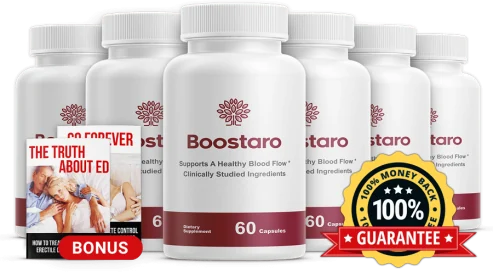
Boostaro leads with L-Citrulline rather than direct arginine, reflecting this same absorption logic. Whether it produces a meaningful individual effect depends on consistency of use, baseline vascular health, and the usual factors that influence any supplement's real-world results.